Why Map Embeds Are the “Missing Link” in Your 2026 Local SEO Strategy
In the high-stakes arena of local search, the Google Map 3-Pack is the ultimate prize. As we navigate the complexities of the 2026 digital landscape, the data remains undeniable: the Map 3-Pack captures between 40% and 50% of all local clicks. If your business isn’t appearing in those top three positions, you are essentially invisible to half of your potential local market. For contractors, medical practices, and retail storefronts, this isn’t just about traffic – it’s about survival.
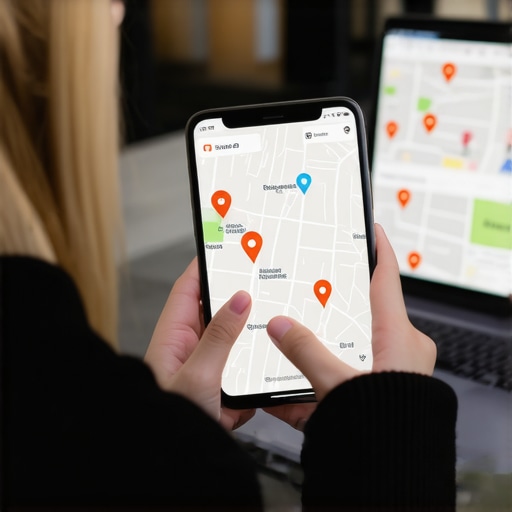
As a Google Business Profile Product Expert, I often see business owners focusing solely on citations or reviews. While those are critical, they often overlook the “digital glue” that binds their website to their physical location: the Google Map embed. In 2026, a map embed is no longer just a helpful widget for the “Contact Us” page; it is a sophisticated signal transmitter that helps Google maintain its obsession with “geographical sense.”
Recent research indicates that over 60% of local searches result in a Maps interaction before a user ever visits the business’s actual website. This means the map interface is the primary gateway to your brand. By embedding a map correctly, you aren’t just showing people where you are; you are feeding the algorithm the precise data it needs to validate your prominence. To truly understand how to leverage this, we must dive into the core mechanics of Understanding Local SEO Factors: Your 2025 Blueprint for Higher Google Maps Rankings.
How Google Categorizes Map Embeds: Relevance vs. Proximity
Google’s local ranking algorithm is traditionally built on three pillars: Relevance, Distance, and Prominence. While you cannot control the “Distance” (the user’s physical proximity to your office), you have immense control over “Relevance” and “Prominence.” This is where google business profile seo comes into play.
When you embed a Google Map on your site, you are creating a hard link between your domain and a specific set of coordinates in Google’s database. This reinforces the “Relevance” pillar. It tells Google, “This content about ’emergency plumbing’ is specifically tied to this physical location in Austin, Texas.” Without an embed, Google has to rely on text-based signals, which are far easier to manipulate and therefore less trusted by the algorithm.
Technical Nuance: Standard iFrame vs. Google Maps API
Not all embeds are created equal. Most small businesses use a standard iFrame – the “Share > Embed a map” option directly from Google Maps. This is effective for basic relevance. However, high-level practitioners often use the Google Maps JavaScript API. The API allows for deeper customization and, more importantly, provides Google with more granular data about how users interact with the map on your page. Whether you use an iFrame or the API, the goal is the same: to anchor your digital presence to a verified physical entity.
By utilizing advanced local seo ranking tools, you can track how these embeds correlate with your movement in the local grid. The objective is to prove to Google that your business is the most logical choice for a specific geographic query.
Beyond the iFrame: Facilitating Direction Requests and Dwell Time
The “2025/2026 SEO Weighting Shift” has fundamentally changed how we evaluate ranking factors. In previous years, keyword density and backlink quantity reigned supreme. Today, Google prioritizes real-world interaction signals. The algorithm is looking for “proof of life.”
What does this mean for map embeds? It means that a map is a tool to trigger high-value signals like Direction Requests and Live Busyness. When a user interacts with an embedded map on your website – zooming in to see nearby landmarks or clicking the “Directions” button – they are sending a powerful signal to Google that your business is a destination of interest. These “Direction Requests” are perhaps the strongest non-review signal in the current ecosystem.
Furthermore, dwell time on your website increases when users interact with a map. If a user spends two minutes planning their route or checking your location relative to their commute, Google views your page as highly helpful. This interaction data feeds directly into your prominence score. For a deeper look at this specific mechanic, I recommend reading How Google Uses Direction Requests to Verify Your Business Is Still Relevant.
To stay ahead of the competition, you need a google maps ranking service that understands these behavioral shifts. It’s no longer enough to just “be” on the map; you must be a hub of activity.
Where to Place Your Map Embeds for Maximum Authority
One of the most common mistakes I see in rank google business profile strategies is the “One-and-Done” approach – placing a single map on the contact page and calling it a day. To maximize your local search visibility, you must be more strategic.
City Landing Pages
If you are a service-area business (SAB) like a roofer or an HVAC technician, you likely have landing pages for different suburbs. Placing a map embed on these pages is vital. However, don’t just embed your home office. Embed a map that shows your service area or, better yet, a map focused on that specific city. This bridges the “Geographical Sense” gap for Google, proving that you actually operate in the areas you claim to serve. Many businesses fail here, which is a primary reason why your city landing pages are hurting your search rankings.
Project and Case Study Pages
A highly effective 2026 tactic is embedding maps on specific project pages. For example, if you completed a major commercial plumbing job in a specific neighborhood, embed a map showing that general area. You don’t need to pin the exact customer address (respecting privacy), but showing a “neighborhood view” reinforces your hyperlocal relevance. This tells Google that your business is active in multiple “micro-locations,” expanding your reach in the Map Pack beyond just your immediate office radius.
Using professional local seo tools can help you identify which neighborhoods your competitors are dominating, allowing you to counter-attack with location-specific content and map embeds.
Technical Optimization & Schema Integration
An embedded map is only as strong as the code surrounding it. To ensure Google’s crawlers perfectly understand the relationship between your website and your Google Business Profile, you must use LocalBusiness JSON-LD Schema.
Within your Schema markup, there is a specific property called hasMap. This property should contain the URL of your Google Maps listing. By pairing the physical embed on the page with the hasMap property in the backend code, you create a redundant, “noise-free” signal that Google cannot ignore. This is a cornerstone of professional google business profile seo.
Performance and Lazy Loading
A major pitfall of map embeds is their impact on PageSpeed. Google Maps scripts are heavy and can slow down your mobile load times, which ironically can hurt your rankings. In 2026, user experience is a ranking factor. To solve this, always “lazy load” your maps. This ensures the map only loads when the user scrolls down to it, keeping your initial page load lightning-fast. A slow site is one of the 5 reasons your business is hidden on Google Maps and how to fix it.
- Use the
loading="lazy"attribute on your iFrame tags. - Optimize for Mobile: Ensure the map is responsive and doesn’t “trap” the user’s finger while they try to scroll past it.
- Match NAP: Ensure the Name, Address, and Phone number (NAP) displayed on the map exactly matches the text on your website and your GBP.
Dominating the Map Pack: Your Next Steps
Map embeds are far more than a convenience for lost customers. They are a fundamental component of how Google validates your business’s physical existence and relevance in a specific market. In a world where proximity is a “given,” your ability to generate interaction signals and demonstrate “geographical sense” is what will separate you from the competition.
As you audit your local presence, ask yourself: Is my map embed facilitating a user action? Is it technically optimized with Schema? Is it placed where it can best support my city-level authority? If the answer is no, you are leaving money on the table. The Map 3-Pack is waiting, but it requires a precision-engineered approach to google business profile seo.
To truly scale your efforts and monitor your local rankings with surgical precision, I highly recommend using SEO Viper Tools. Their suite is designed for the modern local SEO landscape, providing the data necessary to stay ahead of algorithm shifts and competitor moves. Don’t let your business remain hidden – take control of your local visibility today.